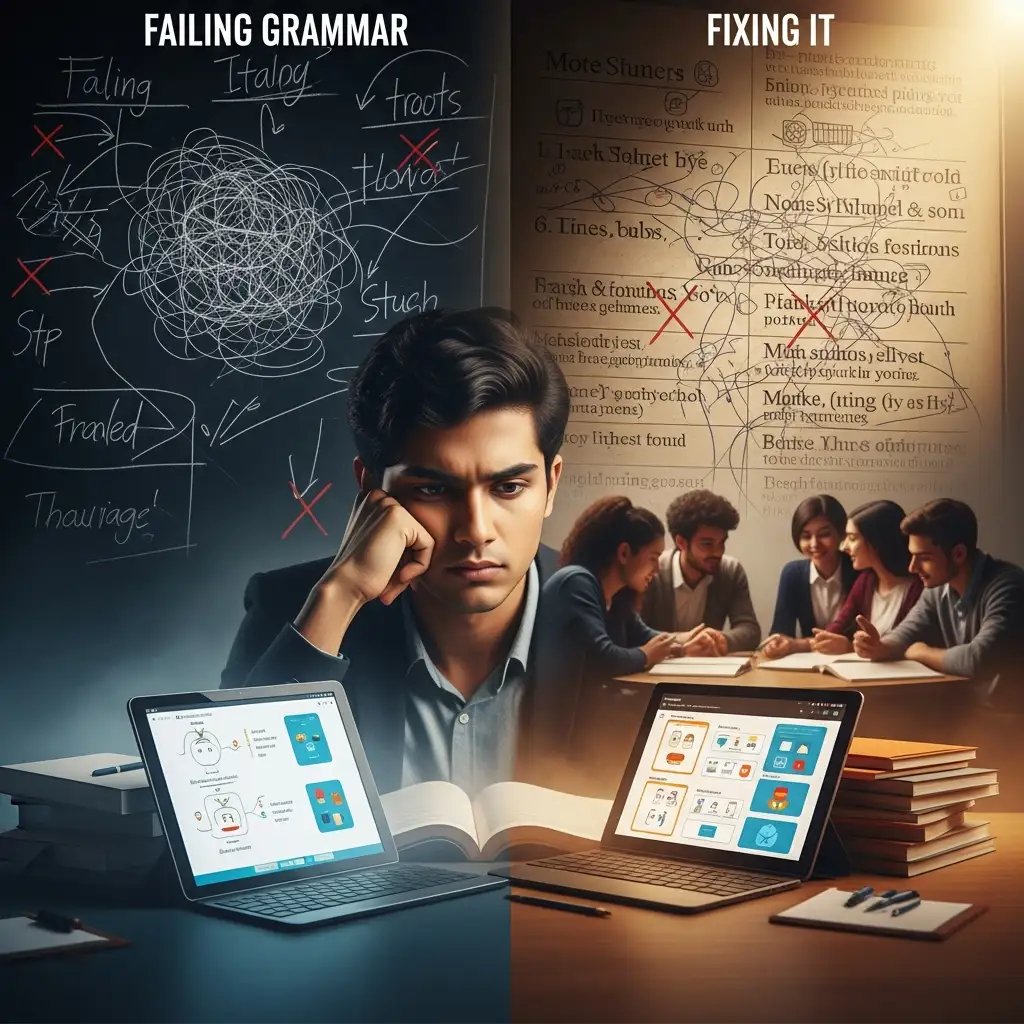

We have all been there. You want to speak English, but your brain starts doing a "math problem": Subject + Verb + Object... Is this Past Tense? Should I say "did" or "done"?
By the time you finish the calculation in your head, the conversation has moved on.
For Hindi-medium students, professionals, and homemakers across India, the problem isn't a lack of intelligence. The problem is the "Translation Trap." If you want to speak English fluently in 2026, you need to stop translating and start "training."
The Death of "Tense = Tension"
In school, most of us were taught that Tenses are scary formulas to memorize. This creates "Tension." But in real life, language is about situations, not formulas.
At Clickbulb, we recommend a "No Tension" approach. Instead of memorizing a table of rules, you should learn how to describe a situation. This is the Direct Method. When you see a cat, you shouldn't think "Billi," then translate it to "Cat." You should look at the animal and immediately have the word "Cat" come to mind.
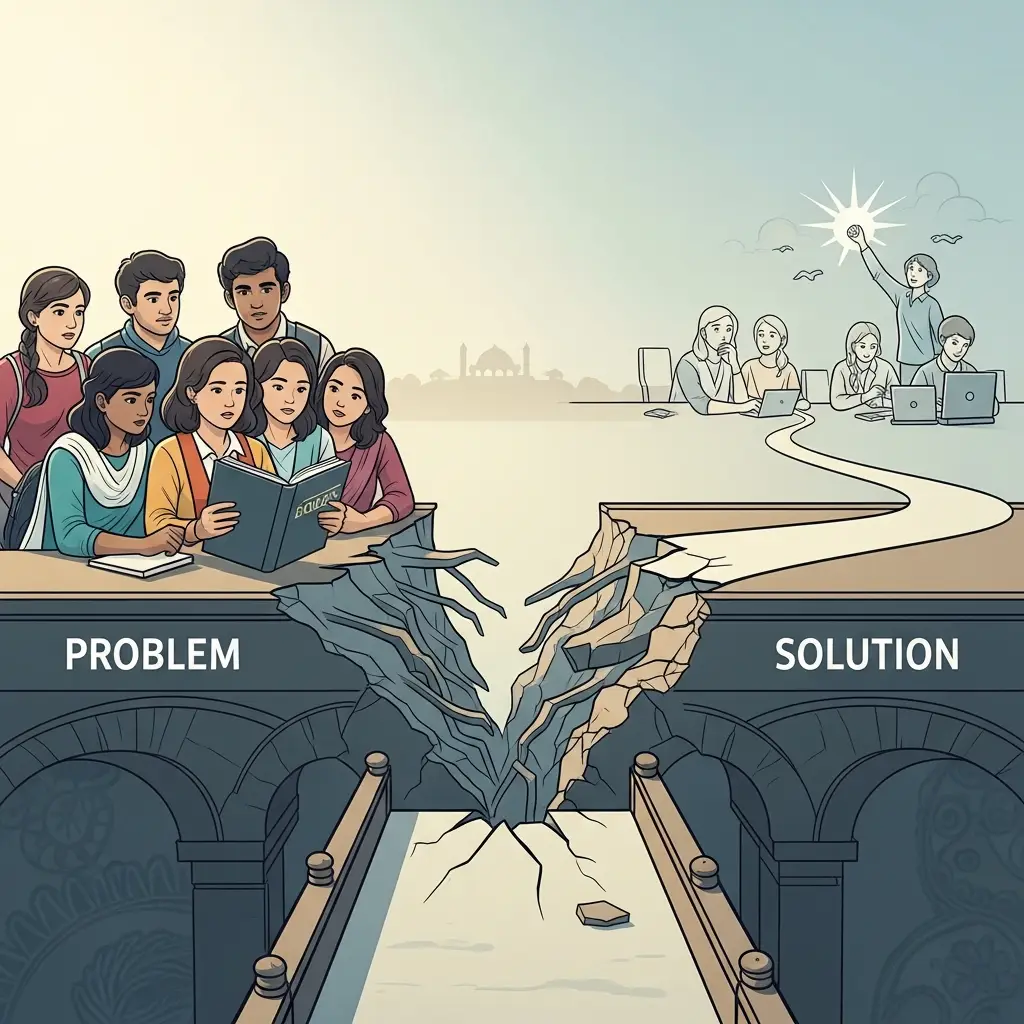
Your Tongue is a Muscle, Not Just a Memory Bank
One of the biggest secrets to speaking like a pro is something called TYT (Train Your Tongue).
Most people try to learn English only with their eyes (reading) and ears (listening). But speaking is a physical act. Your tongue needs to be "trained" to move in new ways for English phonetics. This is why many learners stumble over words like "Wanna" or "Gonna" even when they know what they mean.
The Fix: Spend 10 minutes a day on "Tongue Training" exercises. It’s like a gym workout for your speech.
3 "Pro-Hacks" for Confident Speaking
-
The Divide & Rule Method: Don't try to say a long sentence in one breath. Break it into small chunks. Instead of worrying about a 15-word sentence, just focus on three 5-word chunks.
-
The "Don't Speak It" List: Every learner makes mistakes. The fastest way to sound "Advanced" is to simply stop making the 10 most common "Hindi-English" errors. Once you remove these, your confidence will skyrocket.
-
Visual Vocabulary: Stop looking at long lists of words in a dictionary. Our brains remember images much better than text. Use Visual Vocabulary charts to connect a picture directly to an English word.
Introducing: My English Friend
If you are looking for a guide to lead you through this journey, the My English Friend package is designed exactly for this "No-Translation" philosophy.
This isn't just a book; it’s a Home Tutor system for Hindi-medium learners. It takes you from Basic to Advance level using the scientific TYT method and the "Game of Five" practice system.
Whether you are preparing for UPSC interviews, TOEFL, or just want to speak confidently at your child's school, this course works like a personal mentor sitting right next to you.
Final Thought: Start Where You Are
Fluency doesn't happen overnight, but it happens faster when you have a "Friend" to guide you. Stop translating, start training your tongue, and watch your hesitation disappear.